
Relations with India experienced a downturn during Yunus's tenure, while ties with Pakistan saw positive developments.
The deal fell through over unresolved disagreements over contentious issues, mainly on agriculture and automotive sector tariffs.

The 25 per cent US tariffs, plus a penalty for Russian imports, could dent India's GDP growth by 30 basis points in the current fiscal, but the higher duty is unlikely to significantly affect India's domestic demand-driven economy, Barclays said on Thursday. If the 25 per cent tariff, announced by US President Donald Trump on Wednesday, is implemented from August 1, the effective average US import tariff on Indian goods will rise to 20.6 per cent in trade-weighted terms, as per Barclays estimates.

Finding solutions to address non-tariff barriers would be important for the proposed free trade agreement (FTA) between India and the European Union (EU) and both sides are actively working on resolving these issues, Commerce and Industry Minister Piyush Goyal said on Thursday. He said the two sides are "pretty" close to finalising the talks for the proposed free trade pact.

Lavrov said that the US has set itself the objective of 'achieving economic domination', adding further to it that Americans want to control the routes to leading countries to provide its energy sources to them.
"From President Trump's perspective, the one big shared enterprise that we have is the Quad, which is an understanding where everybody pays their fair share. There are no free riders involved. So that's a good model which works," he said. The Quad alliance consists of the US, India, Australia and Japan.
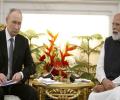
Prime Minister Narendra Modi strongly supported efforts to end the war in Ukraine and conveyed to Russian President Vladimir Putin that India will stand shoulder-to-shoulder in all peace efforts to find an amicable solution to the conflict.
I'...additional concessions, such as opening government procurement, reducing agricultural subsidies, weakening patent protections, and allowing unrestricted data flows -- demands India has resisted for decades.'

Trump's outburst comes amid escalating tensions between the US and its northern neighbour, following recent remarks by Canadian Prime Minister Mark Carney at the World Economic Forum (WEF) in Davos.
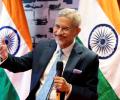
'The logic every one of our neighbours must realise is that working with India will give you benefits, and not working with India has a cost.'

Vice Chair of AIBC Sheda Nandkeolyar expressed her gratitude over the announcement made by Australian Prime Minister Tony Abbott in the Parliament that Free Trade Agreement deadline would be brought forward to 2015.
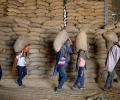
Domestic exporters on Monday expressed concerns over the crisis in Bangladesh and said the developments in the neighbouring country would have implications on bilateral trade. However, exporters expect that the situation may normalise soon. According to exporters, they are already facing disruptions in exports to Bangladesh due to a shortage of foreign exchange in that country.
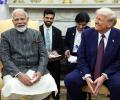
The lawmakers slammed opposition leaders over their remarks on the development, alleging that they were "happy" with the US government's move when "everyone" should be standing together in such a situation.

'No one can or will bar India from pursuing its energy goals as it wishes.' 'The US FTA wording may sound more restrictive, but the underlying reality will not undermine India's sovereign energy decisions.'
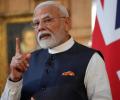
Prime Minister Narendra Modi and his British counterpart Keir Starmer discussed the need to prevent the misuse of democratic freedoms by extremist ideologies. They also addressed terrorism and trade ties.
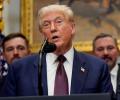
"India is not only buying massive amounts of Russian Oil, they are then, for much of the Oil purchased, selling it on the Open Market for big profits," Trump said in a social media post on Monday.
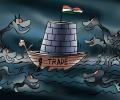
The talks for a free trade agreement (FTA) between India and Canada may have taken a pause but will resume once the political row between the two countries is resolved as the pact has economic benefits for both the nations, trade experts and exporters said on Friday. However, they said that India may not hurry for the trade agreement as 60 per cent of New Delhi's exports are already entering Canada at zero duty. Earlier this month, India and Canada paused the negotiations for the agreement due to political reasons.
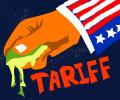
US President Donald Trump on Wednesday slapped an additional 25 per cent tariff on goods coming from India as penalty for New Delhi's continued buying of Russian oil.
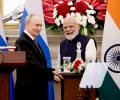
India and Russia have solidified a five-year plan to enhance their economic and trade partnership, while also addressing the ongoing conflict in Ukraine and the threat of terrorism.
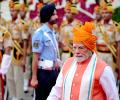
Prime Minister Narendra Modi will travel to China to attend the Shanghai Cooperation Organisation (SCO) summit, marking his first visit in over seven years. The visit signals a potential improvement in India-China relations after recent tensions.
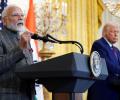
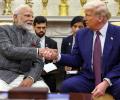
Prime Minister Narendra Modi said on Thursday that India and the United States have set a $500 billion target for bilateral trade by 2030 and added that the teams of two nations will work together to finalise a mutually beneficial trade agreement.

Benchmark stock indices Sensex and Nifty declined on Monday, extending the losing run to the fourth day amid selling in IT shares and foreign fund outflows. The 30-share BSE Sensex dropped by 247.01 points or 0.30 per cent to settle at 82,253.46. During the day, it fell 490.09 points or 0.59 per cent to 82,010.38 but recovered some of the losses towards the close.
A government official said India and the US are exploring an interim trade deal within 90 days.
'I certainly hope the two can avoid a trade war and believe they will.' 'I expect some in India will push for retaliatory tariffs if the Trump administration applies significant reciprocal tariffs.'

'The government is actively engaging with EU to ensure that concerns of Indian companies and hard-to-abate sectors are adequately addressed under CBAM'

Trading sentiment in the stock market this week will be guided by quarterly earning announcements from blue-chips such as Infosys and Bajaj Finance, the outcome of India-US trade talks and global cues, analysts said. Markets may on Monday react to the quarterly results of three heavyweights - Reliance Industries, HDFC Bank and ICICI Bank, an expert said.

A Chinese diplomat's aggressive comments threatening the Japanese Prime Minister over remarks about Taiwan have ignited a diplomatic row between China and Japan.
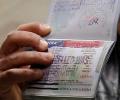
US lawmakers have expressed concerns that policies enacted by the Trump administration, such as the H1B visa fee and tariffs on India, are detrimental to American businesses and threaten the relationship between the United States and India.
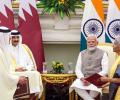
India and Qatar on Tuesday agreed to elevate their relationship to a strategic partnership and double bilateral trade to USD 28 billion over the next five years. Prime Minister Narendra Modi and Qatari Amir Sheikh Tamim Bin Hamad Al-Thani signed agreements and MoUs to strengthen economic cooperation, including a revised double taxation avoidance agreement. The strategic partnership will cover the "entire spectrum" of the bilateral relationship, including trade, energy security, and regional and international cooperation. Both leaders also discussed ways to further strengthen and broaden the energy partnership, including "exploring mutual investments." The Amir's visit provided an "excellent opportunity" for the top leadership of the two countries to discuss and "cement a strategic partnership for enhanced future cooperation."

The agreement was to disengage from remaining standoff sites along the Line of Actual Control (LAC), two days before a meeting between Chinese President Xi Jinping and Prime Minister Narendra Modi on the sidelines of the BRICS Summit.

Bilateral trade was close to $4.2 billion last year, said Canadian Minister of International Trade Peter Van Loan. "Both the Governments have set a target of increasing the mutual bilateral merchandise trade to USD 15 billion in the next five years.
Very sensitive items -- such as apples, which carry political weight and are closely tied to farmer interests in states like Himachal Pradesh and Uttarakhand -- may face restricted concessions.

'The BNP's election manifesto lists grievances against India, mirroring the attitude of past BNP governments.' 'Political parties have been careful not to say bad things about China.'

Since June, India's ministry of external affairs has intensified its diplomatic calendar, hosting several heads of state and government, foreign ministers, and key trade delegations.

To celebrate the new trade deal with India, Australian Prime Minister Scott Morrison on Saturday took to Instagram to post a picture showing him preparing khichdi, his Indian counterpart Narendra Modi's favourite dish.
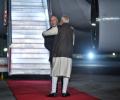
Russian President Vladimir Putin arrived in New Delhi for a two-day visit focused on strengthening ties with India, including defense cooperation and trade, amidst a changing geopolitical landscape.

'The US slump could hit our hosiery market hard since 40 per cent of our exports go there.' 'Job losses could be severe if the government doesn't step in fast.'

In 2023, the share of US electronics imports from India was a mere 1.9 per cent of the $520 billion they imported, while the total Indian electronics exports to the US was pegged at only $10 billion.
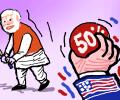
'Things may get much worse before they get better,' predicts Ajay Chhibber.

After initiating talks with the European Union for a trade agreement, India has now started talks with non-EU countries such as Norway to boost trade and investment flows.
